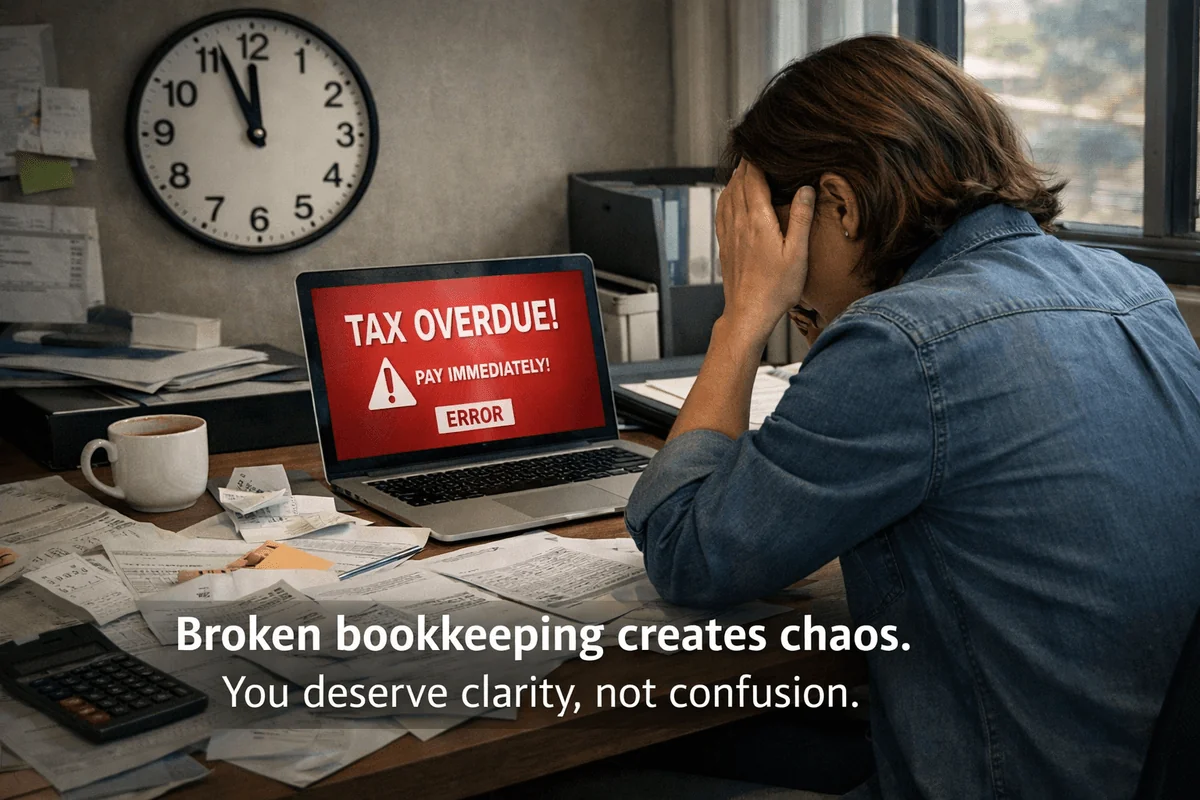
5 Signs Your Bookkeeping Is Broken (and Fix)
5 Signs Your Bookkeeping Is Broken (And What to Do About It)
You don’t need to be an accountant to know when something’s wrong with your finances.
The feeling is unmistakable. You’re not sure where you stand. You can’t answer simple questions about your cash position. Tax deadlines create anxiety instead of routine. And somewhere in the back of your mind, there’s a nagging worry that you’re missing something important.
If that sounds familiar, you’re not alone. Many entrepreneurs know their bookkeeping is broken long before they do anything about it. The problem isn’t awareness. It’s knowing what to look for and understanding what to do next.
Here are five clear signs your bookkeeping needs attention, and more importantly, what you can do to fix it.
Sign 1: You Can’t Answer Basic Financial Questions Quickly
Someone asks you a straightforward question. “What was your revenue last month?” or “How much do you owe in VAT?” or “What’s your current cash position?”
And you freeze.
Not because you’re bad at business, but because you genuinely don’t know. You’d need to dig through bank statements, check multiple spreadsheets, or wait for your accountant to get back to you.
Why this matters: If you can’t access your financial position quickly, you’re flying blind. You can’t make informed decisions about hiring, investing, or even knowing if you’re profitable. In the UAE’s current compliance environment, delays in understanding your numbers can also mean missed deadlines and penalties.
What to do about it: Your financial data should be visible in real time. Modern accounting systems like QuickBooks allow you to see your numbers anytime through dashboards and reports. If your current setup doesn’t give you this visibility, it’s time to upgrade your system or your partner.
Sign 2: Your Records Are Months Behind
You know you should be updating your books regularly. But life gets busy. Invoices pile up. Receipts get lost. Bank transactions go uncategorized.
Before you know it, you’re three, four, or six months behind. And the thought of catching up feels overwhelming, so you put it off even longer.
Why this matters: Old records aren’t just an administrative problem. They’re a compliance risk. The FTA requires businesses to maintain accurate financial records for at least seven years. If you’re audited or need to file VAT returns, incomplete or outdated books can result in denied refunds, penalties, or worse.
Beyond compliance, outdated records mean you’re making business decisions based on old information. You might think you’re profitable when you’re actually losing money, or vice versa.
What to do about it: Stop trying to catch up on your own. It rarely happens. Instead, work with someone who takes ownership of the cleanup and implements a system to keep you current going forward. The longer you wait, the harder and more expensive the fix becomes.
Sign 3: You Dread Tax Season (Or Any FTA Deadline)
Corporate Tax filing. VAT returns. Excise Tax submissions. These deadlines shouldn’t fill you with dread, but they do.
You’re not confident in the numbers. You’re not sure if everything’s been captured correctly. And there’s always that lingering fear: “Am I late? Am I at risk? Will this cost me money?”
Why this matters: Tax deadlines are predictable. They happen on a schedule. If they consistently create panic, it’s a sign that your underlying bookkeeping isn’t structured properly.
Fear around compliance usually comes from three things: lack of visibility, lack of preparation, and lack of trust in whoever’s handling it. All three point to the same problem: your system is broken.
What to do about it: Tax preparation should be calm and routine, not a crisis. This happens when your books are clean throughout the year, when deadlines are tracked proactively, and when you have a partner who communicates clearly about what’s needed and when.
If tax season feels chaotic, the issue isn’t the tax itself. It’s the foundation beneath it.
Sign 4: You Get Surprised by Your Financial Position
You thought you had more cash than you do. You didn’t realize how much you owed suppliers. Your profit looked healthy until someone actually did the math properly.
Financial surprises are a red flag that your bookkeeping isn’t giving you an accurate picture of reality.
Why this matters: Business decisions are only as good as the information behind them. If your financial data is incomplete, delayed, or inaccurate, you’re making decisions in the dark.
This is what we call the “black box problem.” Your finances are happening somewhere in the background, but you can’t see inside. By the time you realize there’s an issue, it’s often too late to course-correct easily.
What to do about it: Demand transparency. Your bookkeeping should provide clarity, not confusion. You should be able to see your cash flow, understand your obligations, and track your financial health in real time.
If your current system or partner keeps you guessing, that’s not normal. It’s fixable.
Sign 5: Your Accountant Is Hard to Reach
You send a message. You wait. Maybe you get a response in a few days. Maybe you don’t.
You have questions, but asking them feels like an inconvenience. Urgent issues don’t get handled urgently. And when you do finally hear back, the explanation is vague or overly technical.
Why this matters: Slow communication isn’t just frustrating. It’s a signal that your accountant doesn’t prioritize responsiveness, which means they probably don’t prioritize ownership either.
In finance, timing matters. Deadlines don’t wait. FTA notices require action. Business decisions need quick answers. If your accountant treats communication as optional, you don’t have a partner. You have a vendor who processes tasks when convenient.
What to do about it: Responsiveness should be standard, not exceptional. Fast replies aren’t about being available 24/7. They’re about respect, reliability, and taking your business seriously.
If reaching your accountant feels like a challenge, it’s worth asking whether this relationship is actually serving you.
The Common Thread
If you recognized yourself in any of these signs, here’s what they all point to: you don’t have clarity, ownership, or visibility over your financial reality.
And that’s not your fault. It’s a system problem.
Good bookkeeping doesn’t create stress. It removes it. It gives you confidence in your numbers, control over your compliance, and the ability to make decisions without second-guessing.
What Fixing It Actually Looks Like
Fixing broken bookkeeping isn’t about working harder or learning accounting yourself. It’s about working with the right partner and implementing the right systems.
Here’s what that looks like in practice. Your records are current and accurate, updated consistently rather than in panicked bursts before deadlines. You can access your financial position anytime through dashboards that make sense, not spreadsheets that confuse. Tax deadlines are handled proactively with clear timelines and communication, so you know what’s happening and when. When you have questions, you get fast, clear answers without feeling like you’re bothering someone. And most importantly, you feel calm and in control rather than anxious and uncertain.
This isn’t aspirational. It’s how accounting should work.
Taking the Next Step
If your bookkeeping is broken, the best time to fix it was six months ago. The second-best time is now.
Start by acknowledging what’s not working. Then decide whether you want to keep managing the chaos or bring in someone who takes ownership and delivers clarity.
You deserve to know where you stand. You deserve fast responses. You deserve visibility over your numbers and peace of mind around compliance.
That’s not too much to ask. It’s the baseline.
Ready to fix your bookkeeping? At Lumea Finance, we specialize in turning broken systems into calm, transparent control. Whether you’re months behind, facing urgent deadlines, or just tired of financial uncertainty, we take ownership and bring clarity. Let’s talk here about getting your finances back on track.
